Home »
Jazz Articles » Interview » Lara Somogyi: Finding Her Muse in the Desert
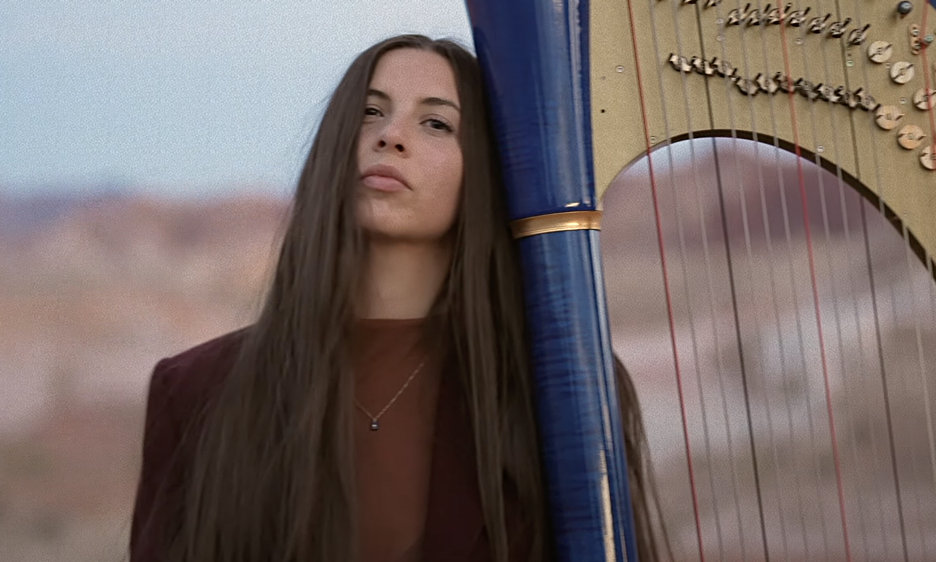
This was improvised out of pure inspiration from the landscape around us. There was no intention of making a
record; it was all spur of the moment.
Lara Somogyi
When one is making a pilgrimage to Joshua Tree in Arizonaeven by Zoom callyou must be careful about protecting your eyes from the blinding sunlight and keep your cap on to cover your brain. Listening to the music of Lara Somogji from her album Désert (Mercury KX 2025), one’s brain is constantly heated by thoughts of striking it rich musically, thoughts that do not fade much with the late afternoon sun going down over the horizon. You may need some sort of perpetual head cover to cool the cerebral machinery of music passing through headphones into the veins.
Naturally, one has to wonder what would draw a L.A.-based musician to construct her studio in the remote expanse of Joshua Tree, though from the background of the laptop’s camera it looks amazing. Getting back on course, here is where the rough ideas are being entertained and processed with the assistance of Somogyi’s husband and producer, Cyrus Reynolds. These could concern many things: (environmental legislation, social awareness, loaded dice… ). Should readers decide to make their own musical pilgrimage to Somogyi’s worldand it is, after all, one of the ornately unique soundscapes left in the worldthey will have to investigate for themselves. The best I can offer as to its whereabouts is a wink and a recommendation for accommodations.
In the improbable event that you misinterpret her music and become confused, please resist the nervous suspicion that this is not jazz. With some of what is termed jazz these days, it is of no concern. Not that genuflecting hordes are likely to descend on Amazon or Bandcamp and clean out the supply of CDs and vinyl. There are plenty of new-agers and curiosity seekers with the leisure and means and an appetite for the exotic artifact, as if they were traveling U.S. Route 491, a paved harp string through the mountains, and collecting souvenirs from Navajo Nation.
“Out here there are a lot of cowboys,” she said enthusiastically. “It’s a very wild west type of town. They used to film all of the western movies here. They have this little set called Pioneer Town that’s a really cool town now with lots of awesome things to do and nice restaurants. But mostly why I love it out here is the nature. It’s absolutely like a modern art gallery because all the trees are so uniquely shaped and with all of the rock formations.”
Surely, Somogyi can be forgiven for being slightly discreet, but what kind of pilgrimage would it be without some element of enigma? For example, her debut album ! (Mercury KX, 2022) was praised for combining the mundane and the fantastical, intimately celebrating artistic eloquence and spiritual fervor. “It’s a very important symbol to me, and it shifts when you put it at the end of a sentence. You could either indicate excitement, an important mark or just an expressive punctuation. So, I felt within the message that I wanted to say on the instrument; it felt like a very apt title.”
The quest is essential to the ritual. To orient our ears at the interface of the melodic and ephemeral worldswhich may be Somgyi’s purposewe must embrace the search as well as the goal. Speaking of the role the desert played in Désert, she offered: “This was improvised out of pure inspiration from the landscape around us. We had no intention of making a record. There was no thought process behind it. There was no discussion. There were no written notes. There was absolutely nothing in any way prepared in making this record, and it was all very spur of the moment.”
Her music may impress some listeners as so poignantly exquisite that it can only be heard as a way of legendary loneliness. Others might react as if being greeted by a long-lost friend. Whatever way its splendid virtues strike you, there is no chance you will complain about hearing the music as beige à vu. “Cyrus just hit record,” she informed, unable to tame a smile as wide as a canyon. “There were no cuts, nothing. It was fluid. After some time, we’d be playing, playing, and we’d kind of naturally stop, and then we would start again. It was very much naturally formed in a way that before we knew it, hours were gone and we were left going, okay, well great to see you. I hope you enjoyed the desert. There was no intention of making a record; we just made one. Months later, Cyrus was listening through it and determined these are pieces to let out.”
“Aura” may remind you of getting an invigorating massage or rolling along in a car with therapeutic seating and lumbar support. It is like being immersed in a technological spa, oozing through the maze of sounds with a serene smile, so relaxed you hardly recognize it is a harp she tenderly plays. “Again, it’s so funny that we don’t remember recording it. All the pieces were named after the fact. Actually, on that one I used a delay pedal, which was a lot of fun because
”
data-original-title=”” title=””>Jean-Michel Blais doesn’t usually play with effects, and we were running through the same delay. When his very intimate and expressive melody comes in, I am just drifting along in this delay pattern and it feels very warm. We named it “Aura” to feel that warmth.”
Blais’ melodies were very prolific and in a way a challenge for Somogyi to adapt to because as a harpist, she plays mostly melodies. In this collaboration, she created beds of sound and arpeggios to fill out the space. “It was a really great pairing between the two of us, having him take over the melody while I thought about this delayed kind of flowing of the chords and harmonies. It did feel like we were being supported by the desert and its magic.”
Taking this musical dreamboat along tilting tables of aural landscape, you might glide through the vastness of the instrument’s scope, a seemingly endless variety of patterns, all of them unbelievably gorgeous. Some of the pieces sound as if they were shaped like pyramids while others resembled the spirit of a Valkyrie. “Cavernes” is so vibrantly purple-ish, you might think it was composed where eye shadow is mined. It has a depth, a complexity where unknown sounds invade your ears as you are peering at the light at the opening to the cavern. “We were actually laughing playing that back,” she recalled. “But this was just a very casual two hours of dancing from each other’s inspiration. In the absence of light, it was a conversation and really lovely.”
Somogyi is known throughout the film industry for her use of electronics and pedals in scoring several movies and TV series, such as her sonic landscapes gracing the compositions of

”
data-original-title=”” title=””>Mark Isham and
Kaisa’s Machine
band / ensemble / orchestra
”
data-original-title=”” title=””>Kaisa’s Machine (from the band Florence & The Machine) on the superb miniseries Little Fires Everywhere. “That TV series was really cool,” she enthused. “I got to use both harps, the acoustic and the electroacoustic ones. I was sort of rolling into Capital Records every day. They allowed me to be creative with what I could express within the scenes, doing my thing apart from their score.”
Effects are what distinguishes Somogyi’s playing. They allow her harp to mimic chordal instruments like keyboards and guitars. She showed exhibits such as a small, battery-operated fan to emulate vibrato when held lightly against the strings. “If you really go to different types of areas and effects and explore the geography of the instrument, it can go to fantastical places for sure,” she revealed, eyebrows arched like stretching cats. She feels every expression on a musical instrument is a valid one, an important one, in a sense what life is about by making, expressing and communicating with each other in different ways sonically. “Things like I’m showing you,” she said while displaying a felt pad. “It’s meant to muffle the bass wires so you can lessen the resonance, but I’ve put it in between the strings to create a xylophone effect. I have other things like, tape, paper, that I can put on the strings, even this milk frother. Or a post-it note that you put on the end, and it can create like a tremolo effect. The fans, of course are not going to harm the strings but they will change the expression. There is a lot of stuff that you can add to make it feel expansive. But the actual vibrato of a string isn’t possible unless you either use effects or play trills.”
When she went to the Royal Academy of Music in London, a school rooted in classical tradition, Somogyi found outlets to listen to separately that would have an influence on her later interests. She dove into the work of musicians like
”
data-original-title=”” title=””>Jon Hopkins or ”
data-original-title=”” title=””>Bonobo, also artists like Ólöf Arnalds and ”
data-original-title=”” title=””>Nils Frahm, who were already into electronics. Ideas for experimentation were enhanced by meeting

Brian Eno
synthesizer
b.1948
”
data-original-title=”” title=””>Brian Eno while in London working at a gym to pay her conservatory tuition. Eno worked out at that gym. “He would say little tidbits of wisdom that as a musician, I was absorbing and grasping. I was so excited to hear somebody so prolific and creative. One time he brought a rose from the local florist, and he was like, has anybody ever seen a color like this? He said, come outside and look at the color in the light. And I was like, no, I haven’t. Next, he brought a bird whistle. He would ask do you know what bird makes this sound? Then a sample of a perfume that he had actually made. What does it smell like to you? So, everything was sensory, and it was really interesting to me as a classical player, because at that time I was very rote in my ways. You can kind of waltz in a magic spell with this energy of just pure creativity. It was really quite extraordinary.”
Those sensory experiences made her feel present and awakened an understanding of how you can express and feel different emotions. “When related back to music,” she clarified, “in the practice room, I sensed how does this feel on my finger when I play? What does it feel like to play down here? How does it feel to play from just hearing how Eno would move about the world in a very observing and sensory way? That really made a mark on me.”
The piece “Escalier” embodies the serendipity of the collaboration with Blais. Somogyi describes it as “one of those moments when stars align,” and Jean-Michel said, “Weaving through hope, doubt, and acceptance, the piece mirrors the steps we take on our journey toward discovery and healing. The harp’s delicate harmonies create a cloudy tapestry upon which the piano softly lands. Eventually left alone, the piano is later rejoined by the harp, adapting its rhythm, gradually concluding in a quiet celebration of unity and understanding. As it ascends and descends, the music reflects the emotional climbs we may encounter, gently reminding us we are not alone. Together, we can find solace and strength in both music and each other, illuminating the beauty found in light and shadow, through resilience.”
The duo chose the French word for stairway as well as the spelling of the title for the album partly because Blais is from Montreal, and it became a way to marry both worldshis culture and language with where they recorded the album at her studio. She went to his show in Los Angeles and asked if he wanted to come out to see Joshua Tree. Outside watching the view of the landscape change from light to dusk was stimulating, mirroring a journey, illumination to obscurity. “It’s the expanse of nature,” she asserted. “You get a wide lens view of that moment when the sun pops up, or at dusk, when the moon rises from behind the mountains. It becomes like a birthing, really special. I don’t know if it’s cheesy or not, but yesterday I was brought to tears. I walked outdoors and the colors just made me gasp. It was a beautiful, rich orange, and every day it changes. That transition of the heat of the day is gone, but all of a sudden it felt very safe, a very warm embrace. The temperature was just high enough to make you feel comfortable and sort of held.”
You can imagine this experience while listening to “Révérence,”which begins naturally with a solo. “I think the reverence and magic that comes from feeling the light and vibrations was flowing through us,” she said, pausing to find the right way of expressing the sensations. “I have no idea how we were just dancing in that after I started that intro with the glissandos that absolutely carried and accompanied his melodies throughout. It was an apt title beause of the very free sensation of how it felt like flying.”
There are metaphors to upward motion and spirituality, also found in the piece “Ascencion.” She pictured two people holding hands, which eventually became the image on the album jacket.”We wanted to have artwork from both cities, Joshua Tree and Montreal,” she said. “The porches are from Montreal but all of the landscape and the videos were filmed here. We wanted listeners to feel like they were here with us and experiencing the desert in its lush majesty. Everything is slow-mo and we wanted it to feel like you have your headphones and you’re going for a walk in the desert.”
It is a given that time spent in the desert may well produce mirages, which is simulated on the record. “When Jean Michel plays “Mirage” with me, it feels like a tumbling when someone runs down a hill and you just let go and almost lose your balance, like we’re running. It’s very expressive and celebratory.”
In Somgyi’s world, the present knocks against the future while regarding the past, development knocks against the natural, retro against indulgence, reality against dream, masculine against feminine, devolution against creation. There is a calm that lays upon your eardrums, and the peace index triples. It could be a haven, a refuge from the cries of the world, sweet yet so powerful that its vectors are capable of holding one’s soul upright, afloat as if in metaphorical brine. These words, however, fail to explain its magic, an intrinsic presence that is enhanced by her plying the wizardry of the strings and pedals.
Incapable of comprehending the mysteries of the harp, you are content to sit and loll in private communion with the disembodied waves that surround you. Like a dolphin, you may wear a perpetual smile, as sloppy and loving as the cradle we all rocked out of. Exploring Désert for a second or third time, seemingly impossible to have missed it earlier, her playing contains a broadcast wattage that could have carried its sandy song to the spheres. It may have been embellished by electronics, but it is an entirely natural composition, an entirely natural experience.
Tags
PREVIOUS / NEXT
Support All About Jazz

All About Jazz has been a pillar of jazz since 1995, championing it as an art form and, more importantly, supporting the musicians who make it. Our enduring commitment has made “AAJ” one of the most culturally important websites of its kind, read by hundreds of thousands of fans, musicians and industry figures every month.
Go Ad Free!
To maintain our platform while developing new means to foster jazz discovery and connectivity, we need your help. You can become a sustaining member for as little as $20 and in return, we’ll immediately hide those pesky ads plus provide access to future articles for a full year. This winning combination vastly improves your AAJ experience and allow us to vigorously build on the pioneering work we first started in 1995. So enjoy an ad-free AAJ experience and help us remain a positive beacon for jazz by making a donation today.