Home »
Jazz Articles » Album Review » Duo Réflections: Duo Réflections
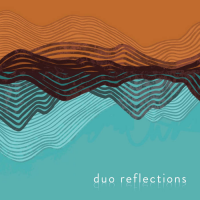
Piano and guitar duos walk a fine line. Too much harmony, and the sound collapses into density; too little, and the music drifts apart. In the hands of the French group Duo Réflections, this fragile balance becomes something alive and breathing. Pianist
”
data-original-title=”” title=””>Sylvain Rey and guitarist
Leandro López-Nussa
guitar
”
data-original-title=”” title=””>Leandro López-Nussa have been refining their partnership for nearly a decade, and La Tregua marks the moment when trust, risk, and restraint coexist in perfect tension.
Their debut album reimagined standards, but La Tregualeaves the familiar behind. Composed entirely of original pieces, it was recorded in a single day on analog tape, using only one microphone. This method strips away all artifice, leaving the music to exist exactly as it was playedpure connection between two musicians, sharing air, sound, and intuition. The immediacy is apparent from the opening notes of “Aube.” It begins almost hesitantly, with dampened piano strings and softly glinting guitar harmonics evoking the stillness before sunrise. Melody is unnecessary at first; rhythm, pulse, and the sense of something waking drive the moment. By contrast, “Fo’ Blue” snaps into motion with playful syncopations, percussive taps on the piano body, and an electric guitar line that feels half blues, half street dance. The interaction is lively, a musical conversation that challenges and responds in real time.
The album’s title, La Tregua (The Truce), captures its essential mood. This is not the stillness of peace, but the calm that follows intensity. The title track unfolds like a long exhale after holding one’s breath: tentative at first, gradually widening into a bright release. It builds and breaks with natural pacing, its final minutes shimmering with quiet satisfaction, as if the music has found its own resolution.
Other moments wander into more mysterious territory. “En las Nubes” drifts with dreamlike patience, a slow conversation suspended in midair. The guitar’s tone feels almost weightless, while the piano threads its way through like a cloud’s shadow. The piece seems to shift temperature as it moveswarm one minute, cool the next. “For Karl,” the only cover, written by the late Denis Badault, reflects his lingering influence on the duo’s phrasing and sense of space. Their interpretation is reverent yet unguarded, a musical homage that speaks directly through the notes.
Rey and López-Nussa exhibit uncommon empathy as players. Silence is not filled but respected, and the interplay often blurs the boundary between instruments: The guitar sometimes resembles a harp, the piano soft percussion. On “Bobado,” lines are traded with quicksilver energy, shifting from lyricism into abstraction. By the closing track, “L’ami de Rasputin,” the tone turns shadowypart dance, part ritualconcluding not with resolution but a sense of continuation, like a story that will pick up again tomorrow.
La Tregua celebrates imperfection, the unrepeatable nature of live sound, and the moment when musical conversation becomes creation. It records years of trust and collaboration, the two voices learning to move as one. The result is intimate, unpretentious, and daring. It is an album that invites close listening and deep attention.