Home »
Jazz Articles » Interview » Matt Marantz: About Music, Money and Mouthpieces
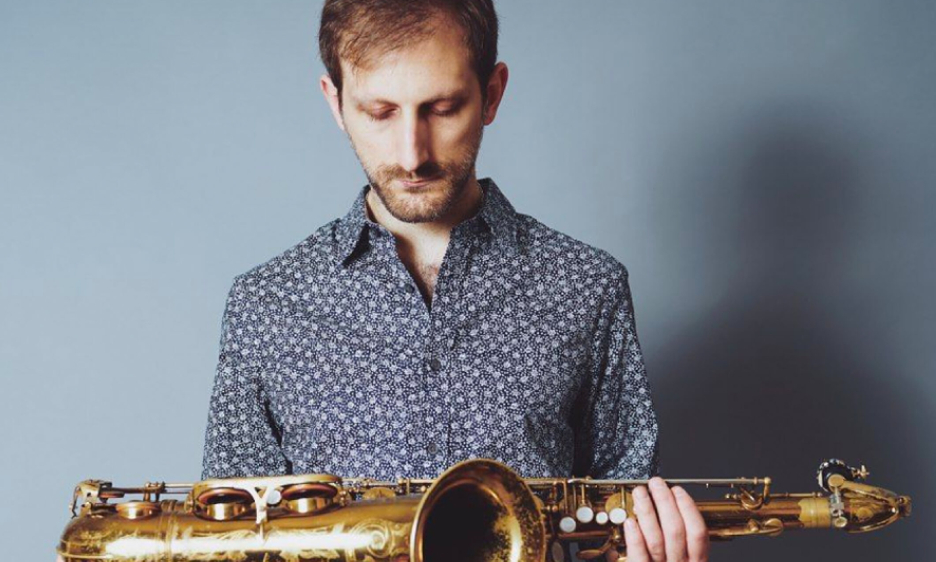
So, every saxophone player struggles with their mouthpiece. I mean, it’s a tale as old as time. Everyone hates their
mouthpiece and they’re always looking for a better one.
Matt Marantz
Back in ancient times, when people would buy actual magazines with paper and print and pictures and ads, some of the music publications would offer companion CD compilations. You could always find two or three tracks that stood out and maybe enticed you to check out an artist’s recorded output. That is how I came across the name of Matt Marantz. It is always strangely refreshing to find or hear of an artist whose tone is as smooth as gravy on biscuits. Unable to find the song he had contributed on any of his four albums, I finally sent an email to him asking for details. He replied: “I was in high school when I recorded that. That was a high school group. And I’m not saying it was great music, but that was the type of experience that led me to believe that I had a chance at doing this as a career.”
Originally from Texas, Matt Marantz got his start by growing up in a musical family. At a young age, during the early years of his saxophone studies, he heard the music of

Charlie Parker
saxophone, alto
1920 – 1955
”
data-original-title=”” title=””>Charlie Parker,
Phil Woods
saxophone, alto
1931 – 2015
”
data-original-title=”” title=””>Phil Woods and

Cannonball Adderley
saxophone
1928 – 1975
”
data-original-title=”” title=””>Cannonball Adderley via his father’s record collection. He attended Booker T. Washington High School for the Performing and Visual Arts in Dallas where some of his peers, most notably pianists

”
data-original-title=”” title=””>Sam Harris and

Frank LoCrasto
piano
b.1983
”
data-original-title=”” title=””>Frank LoCrasto, had a big impact on his musical learning and composition style.
Marantz moved to New York in 2004 and still lives there, in Brooklyn. His musical career has had its ups and downs, but his journey has taken him as far away as the Middle East, Europe and Asia for tours, gaining opportunities to perform live with the likes of

Herbie Hancock
piano
b.1940
”
data-original-title=”” title=””>Herbie Hancock, Michael Bublé,

Branford Marsalis
saxophone
b.1960
”
data-original-title=”” title=””>Branford Marsalis,

Terence Blanchard
trumpet
b.1962
”
data-original-title=”” title=””>Terence Blanchard and

”
data-original-title=”” title=””>Jason Moran. Curiosity turned urgent with the necessity to put food on the table and pay ConEd to keep the lights on, so he branched out into production and engineering. Then the opportunity came along to begin building his own custom mouthpieces for saxophone players. His list of clients is both lengthy and dotted with some very well-known musicians. Adamant that ersatz mouthpieces would not be his goal, when compared to the high-end products, his stand up favorably and that is not sugaring the assessment.

”
data-original-title=”” title=””>Melissa Aldana had this to say about the quality of Marantz’s workmanship. “After years of working on sound while trying to gain a deeper understanding of what direction I want to go for, I have finally found the mouthpiece that allows me to connect on a deeper level. Matt Marantz’s Slant Legacy HR for tenor sax is the best mouthpiece I’ve ever played. This is my dream mouthpiece.”
Mouthpieces keep him so busy that a new record has lingered for several years awaiting his solos and finishing touches. “I can put out a record that I work extremely hard on and I’m super proud of,” he said, “and it gets no traction. But that easy listening stuff I have a contract for just takes off on Spotify.” Easy listening is the jazz version of sushi, uncooked though colorful, but it’s nothing to get excited about for him.
At gigs, you will often see horn players fiddling with their mouthpieces, puckering up like they were about to kiss a snake, not knowing if it would bite them in the nose. Marantz saw a niche to fill, one that has a salubrious effect on one’s bank account. Explaining what he manufactures, the words poured out like water sluicing from an overburdened dam. Nevertheless, he is bound and determined to put the finishing touches on that new album, which will be fusion style with as much EWI playing as tenor saxophone. But here we are, four years after hearing that jazz compilation disc, and another email was sent to Marantz, which led to the following interview. He has much to say on a variety of topics.
All About Jazz: Good afternoon, Matt. We are in the midst of a thunderstorm in East Tennessee. How is it in Brooklyn?
Matt Marantz: Clear as a bell. It’s way more neighborhood vibe here. You’re off the grid a little bit. Like living in Manhattan is ridiculously expensive. Everyone I know lives out here, so if you’re going to be doing rehearsals and sessions and stuff, it’s like your neighbors are your friends. I can walk to their houses. Out here you have a little bit more normalcy. We don’t really have crime in this neighborhood and it’s so chill. I have a two-bedroom apartment with my brother, Luke, and we have a room in the basement. We’ve built a recording studio here and no one can hear it. You can’t find places like that in Manhattan or Queens.
AAJ: You come from Texas. How important was your upbringing for developing your career as a musician? Did you go through the vinyl collection of your parents? How did you get interested in music?
MM: My parents are both musicians and my brother is too, My dad was into jazz, but he doesn’t really play a lot anymore, though he used to have bands. That’s how I started, doing my first gigs with his band. He taught jazz at a school called Booker T. Washington High School for the Performing and Visual Arts. There are a bunch of those schools around the country, but they’re not fancy private institutions by any means. Although long after I went there, they did rebuild it into something that kind of resembles the campus of Berklee. But I’m actually glad it was kind of lousy and beat up when I was there because all we cared about was what we were doing. We were just so focused on our art.
My mother is also an amazing musician. She is a really serious classical pianist. I didn’t really realize how good she was until I was older. Last time I was visiting them, I realized she was reducing a score to a piano part one day just for fun. She’s an amazing reader and accompanist of classical singers. I always heard my mom practicing and playing, mainly getting ready for these performances every semester. And then she would do student recitals, graduate recitals. She was always an accompanist more than a solo classical pianist. And she’s always played at churches. I grew up listening to her play in church every Sunday.
AAJ: When did you get your first saxophone?
MM: Come to think of it, we actually bought my saxophone from a guy at the church. It’s kind of a funny story actually how I started playing sax. I originally wanted to play guitar, and my dad had a student that played bass and he was really rich. The kid gave me a bunch of basses when I was in sixth grade, which was very nice of him. I tried to teach myself how to play. I had a really, really small keyboard amp, which just exploded basically when you ran bass through it. And I never learned any of the notes, but I loved the sound of electric guitar and that was the closest thing that I could get to it. So, I was trying to figure it out and play some Jaco (Pastorius) licks. I also got a guitar and that’s what I really wanted to play, but I just couldn’t figure it out. My dad played trumpet and my mom obviously being a pianist, I had always been fooling around on the piano and I feel like I already knew a few notes by the time auditions came for the band program. I wanted to try the saxophone because they didn’t have guitar, and I didn’t want to play the same instrument as my dad. I had already played enough trumpet to know that I didn’t love the way that it felt.
But anyway, on the band audition day, I just fell on my face. I couldn’t do anything that they asked us to do. Their method for selecting your instrument or deciding what you were going to play was to just let you have a quick try of everything and then they would judge your affinity for it. When it came to try the saxophone, I didn’t even know the thing came apart, and all they would let you test was the neck of an alto with a random reed and a random mouthpiece on it. I’m a mouthpiece tech now, so I’m sure that that was the setup from hell.
AAJ: That must have been awkward.
MM: No kidding. I couldn’t get anything but a squeak out of it. The thing was, I had really good grades, always had straight A’s. They told me that they needed smart people to play the bassoon, and there was a really smart girl who fell for it. But I went home and told my mom what they said, and she was like, do you know what that is? I didn’t. She played “Peter and the Wolf” for me on vinyl where there’s a bassoon solo, which was hilariousshe knew that. I actually thought it sounded like a fart. I mean, I must’ve been 11 and there’s no way I was going to play something like that. Besides, I saw what it looked like. You had to carry it in this huge case, and it was really fragile and you had to make your own reeds. The whole thing just sounded completely lame. My mom went down to the band hall and told them that I wasn’t going to practice anything I didn’t want to do. They changed their mind and gave me a shot at the saxophone, and we bought one. Our family didn’t have a lot of money, so for them it was kind of a big deal. We got it used for 300 bucks from an electrician at our church, and I still have it. It’s a student model, Yamaha Alto. I snuck it into the bathroom because I wasn’t allowed to open it until I had my first lesson, so I would know how to not break it. But I knew I wasn’t going to mess it up.
AAJ: Well, bathrooms are legend for having great acoustics.
MM: I didn’t play it. It was a secret. I was just checking it out, and then almost as soon as I started playing it, I got totally obsessed. In school, we had to fill out these cards from the beginning, and my teachers were always asking is this true? Did you really practice these many hours this week? I got to brag about how much I practiced that week. My dad built an office in our backyard out of one of those oversized shops you can get from Home Depot. It was insulated, so I could practice out there and the neighbors couldn’t hear it. He had his entire vinyl collection out there, I was practicing all the time and listening to his records. He had everything from Miles (Davis) to Cannonball (Adderley) to (John) Coltrane,

Ella Fitzgerald
vocals
1917 – 1996
”
data-original-title=”” title=””>Ella Fitzgerald to

Duke Ellington
piano
1899 – 1974
”
data-original-title=”” title=””>Duke Ellington. He had it all on vinyl. And
Phil Woods
saxophone, alto
1931 – 2015
”
data-original-title=”” title=””>Phil Woods was one of my favorites. He had a lot of really obscure, weird Phil Woods records from the seventies and all the great Cannonball Adderley records. He had
Charlie Parker
saxophone, alto
1920 – 1955
”
data-original-title=”” title=””>Charlie Parker records, all the classic Blue Note era stuff, which has never been my favorite music. And he had a lot of great

Joe Henderson
saxophone
1937 – 2001
”
data-original-title=”” title=””>Joe Henderson records that I do love. I pretty much lived out there.
AAJ: Your initial training came in high school music courses and band?
MM: I had two great teachers. One of them was Darren Burris; the other was a guy named Rich Williams who passed away while I was in high school. He was well known around the Dallas area for being a music educator. He was really militant about the technique. I was lucky to have these two teachers that cared about me. They were also really hard on me and didn’t offer a lot of compliments, even if you were sounding good. If your fingers were a little bit pointed the wrong way or your embouchure was doing something funny, they would call you out. That was a bonus because the saxophone is really easy for me now.
All through my time in college, no one ever talked about technique again. And I think that’s a big problem with jazz schools because they don’t focus on how well you play your instrument. I went to three different schools, and I never had anyone really talk to me about my instrument until I was in an artist diploma program. I got to study with some famous sax players, and they brought some things to my attention that I wasn’t aware that I was doing. In the conservatory, we talked about improvising and writing, And I was already way past Eugene Boza and the Ferling Etudes and all that because I had done that when I was 14 and practicing eight hours a day.
AAJ: Did you first play out with your dad’s band?
MM: He did a lot of weddings, but he always had a jazz quintet, and I would play with him once I got good enough to learn tunes. So, I was learning how to read and learning how to hear things. I remember the very first gig I ever did. I was 12. I mean, I wasn’t good enough to be on the gig, but I knew what was going on and was so excited about it. Like when I would try to take a solo on “All the Things You Are,” I’m sure it sounded horrible like from “Friday the 13th,” the movie. I remember the first gig we played “The Days of Wine and Roses,” which I had been working and knew. They did that classic thing where you play the first half of the song in F and the second half of the song in A flat. It keeps it a little more interesting because the song is kind of boring and the chords don’t move around very much.
After the set, we were having something to eat, and the bassist explained to me what was going on. It was actually extremely hard for me to understand how chord changes work. It just never really clicked until I took an advanced class at the Arts Magnet High School in classical music theory. If you got an exemplary grade on the test, it actually gave you some college credit and set you up to be entered for this scholarship where if you did well enough on the exit exam, you could get $5,000 towards your schooling. And I got that. As soon as I understood that you could pivot from one key to another quickly and that there could be passing chords, it all started to make sense in the jazz realm. That clarified so much for me about how music works and how one passage will lead to another, and how to voice lead and how to understand what was happening, the relationships at the key centers, by just looking at the pivot chords. That’s when I really came to life and started learning how to play chord changes and started writing, too. I had to write for one of the groups in school called the MIDI Ensemble, which is kind of a silly name but it was a fusion classic keyboards group with sax.
AAJ: You started doing some writing for that group?
MM: Yes. There were two really good piano players at my school. One of them was just a bebop phenom, an incredible player who I knew since we were 13. I met him at a jazz camp, and I’m not going to say his name because he’s had a very sad life and I’ve totally lost touch with him. He became consumed with drugs. But he was one of the most talented people I’ve ever met in music. He sounded like

Bill Evans
piano
1929 – 1980
”
data-original-title=”” title=””>Bill Evans. There was also a kid my age that I met a little later named

Eldar Djangirov
piano
b.1987
”
data-original-title=”” title=””>Eldar Djangirov, who got a seven-record deal with Sony right out of college. And then a couple years later, I met someone who became my longest best friend. His name is
”
data-original-title=”” title=””>Sam Harris, and he’s an incredible pianist who is well known for being in the band of

Ambrose Akinmusire
trumpet
b.1982
”
data-original-title=”” title=””>Ambrose Akinmusire. They’ve got a bunch of records on Blue Note, and he’s also toured a lot with Melissa Aldana. He’s kind of famous.
Sam and I were always checking out the same music, even though we didn’t have much money to buy CDs. And then he and I ended up being roommates at Manhattan School of Music, and he really excelled there. He was working hard the whole time, while I was a little more casual about college. I didn’t like it. I just wanted to go out and hear everything, go to every jam session. That’s how it all started for me. I was just locked into it from the beginning. There was never any question about what I was going to do, which I don’t know if that was necessarily good because I had no idea what reality was going to be later. I mean, I would win that Downbeat jazz soloist of the year award every year, but I was working for it. I was practicing so hard all the time. Those were my goals. But I don’t think it was necessarily the greatest thing because I had a rude awakening later.
AAJ: Doesn’t everyone wish they had a look into a crystal ball before making major decisions on career paths?
MM: I still love music just as much as I always have, but I’ve pretty much given up on having a real career in this. That’s just the way it goes, for a lot of people. This is not a fair world. But the thing is, I’ve had so much fun and great times in music, I still don’t think that I would’ve changed going for it. I would’ve probably approached college differently, gone to a real college where I would meet people other than jazz nerds. I never had a girlfriend. I never had college experience. I was locked into the practice room until about age 25. And then I was trying to figure out my life, because I had ignored a lot of that life stuff.
But it was kind of like a rocket ship. I would just go from one big thing to another. I got to play at the White House that summer I was 17.

Billy Taylor
piano
1921 – 2010
”
data-original-title=”” title=””>Billy Taylor had heard me play at one of those IAJE conferences. He was a beautiful guy, and he did a lot for young jazz musicians. By the time I got to know him, he was not in great health, and in fact, sometimes he sent a sub to events. But one of the coolest things I got to do was a band that he put together of young All Stars. I met

Marcus Gilmore
drums
b.1986
”
data-original-title=”” title=””>Marcus Gilmore, a great drummer who is the grandson of

Roy Haynes
drums
1926 – 2024
”
data-original-title=”” title=””>Roy Haynes, who was an obvious prodigy. He is my age and we still see each other sometimes, but he’s gotten to the level of an

Elvin Jones
drums
1927 – 2004
”
data-original-title=”” title=””>Elvin Jones.
AAJ: Reality does have a tendency to get in the way of plans and hopes.
MM: I’ve done a lot of things, but for me at this point, I barely ever play a gig. Ironically, I have one tonight, but I can go a year in New York and do three or four things that are interesting, and none of them are ever main stage anymore. It is really difficult to lead things, basically impossible except for a few people who are just lucky. And that has to do with all sorts of different things from politics to money. For me, it just hasn’t gone the way that I had hoped. I never lead my own week at the Vanguard, but I have friends that do. That’s just the way it goes. It doesn’t really make sense if you’re speaking about music strictly from a musical perspective. I think art circles are just like that. Let’s liken it to the artist that gets their piece in a gallery in Chelsea where someone’s going to see it. Well, there might be two hundred other artists that have just as much talent that you’re not seeing in the gallery, and there’s a million reasons for that.
New York is wild because I meet people all the time where I’m just like, I cannot believe this guy can play the drums like that. And nobody has heard of him. It happens over and over again. When you take a step back and realize that, it makes it a little easier to swallow. But I’ve struggled, man. I have five jobs right now. I got home from work at six in the morning and woke up right before this interview. And the craziest part is after I make enough money, at the end of the day, I really don’t have a lot of energy left to put back into music. I’m almost 40 and I’ve got an album I recorded five years ago that I can’t seem to finish because it’s not going to make any money. It’s very difficult for me to focus on things that don’t make money because life is so expensive here.
AAJ: Isn’t your profession still in music whether you are recording or playing or not?
MM: About fifteen years ago, I started messing around with sax mouthpieces, and that’s sadly the way most people know who I am these days. I say sadly because I wanted to be a player. So, every saxophonist struggles with their mouthpiece. I mean, it’s a tale as old as time. Everyone hates their mouthpiece and they’re always looking for a better one. And I get it because they’re very, very sensitive. It’s the most sensitive part of the instrument. And when it’s working right, everything is just so easy. I couldn’t find one that I liked, and I knew that there was something wrong. The first instinct a human has is to blame the gear, right? It’s the machine’s fault, but actually you can learn to play just about anything.
I’ve always been the type of person that builds models. I would get my mom to buy me plastic models or erector sets. I built a roller coaster. It took me six weeks, and it was based off following the plan. It wasn’t from scratch, but it worked. It had a rubberized thing that had a gear and it would send the car flying, and it all worked. It took forever. It was like five feet long, bigger than me at the time. The point is: I’d always been into working with my hands and building things and trying to understand how things work. So, when I started getting into mouthpieces, it was a little bit of a natural progression, although it was so difficult that I definitely quit once or twice during the first year. But then people would find out that I did that, and they’d started asking me to work on their mouthpieces. I did a lot of stuff for free for friends and teachers at first, but then totally unintentionally, it turned into a business. And I put a little section on my musician’s website while I was in grad school to talk about the mouthpieces, and people started finding out and sending me things from across the world to work on. And it just snowballed. It took me around five years, but I got really good at it. And then I became one of the guys, you see their name on forums and Reddit, and talk about them across America, because not many people understand how the mouthpiece works. I make them and I sell them on my website, and people order them from all across the world now.
AAJ: This may sound like a dumb question, but if the mouthpiece business is going so well why do you have five jobs?
MM: It goes really well, but it costs me a lot of money to run it. I can spend $10,000 every quarter if I want to on parts and supplies. So, it feels like I’m making money sometimes, and I am, but I’m not really. I am making enough to support the business, and it wouldn’t cost me anything if I didn’t make the mouthpieces too, just relying on refacing. I do it because I want people to experience the same level of comfort and ease that I do when I play, because my life on saxophone is so easy. The mouthpiece is just incredible now. I never even think about changing it because I love what I have. And it took a long time to get there.
AAJ: Where can musicians find your mouthpieces on the Internet?
MM: I’ve got a whole different website for that. It’s called Marantz custom mouthpieces.com.

Ravi Coltrane
saxophone, tenor
b.1965
”
data-original-title=”” title=””>Ravi Coltrane is using my pieces. Melissa Aldana has a custom model, and I’ve sold tons across the world.
AAJ: Shouldn’t you be charging more?
MM: I’m charging about as much as I can, but see, it’s a fine line being a musician and making instrument parts. I don’t want people to feel strapped when they buy my stuff, but it’s just that it costs a certain amount to run it or to buy the materials. And you also have to build in overhead so that if you want to sell through shops, there’s room to discount your direct sale price. They’re already on the expensive side, and I don’t sell tons of ’em, maybe 10 a month, but I make them all by hand. It’s not like they’re being spat off a machine and put it in a box. I can spend two or three days perfecting one and doing all the finishing work and the gold plating.
As for other jobs, I also do electronics repair. I’ve always been really into studio equipment, and I do a lot of engineering too. I love being in the recording studio, but all of that stuff is so expensive. So, I started learning to build clones of the preamps, the Neumann microphones. I have perfect clones of each of the parts inside the microphone. And I’ve built my own version that’s identical in terms of the way that it works to the ones that they currently sell.
Eventually that led to me doing some live sound. I worked as a sound guy at Birdland for a while until I decided I didn’t want to do that anymore. That’s not nearly as artistic as being in the studio, and it’s really hard work and not glamorous and you wind up seeing a different side of musicians. It’s kind of ugly. I don’t really like being on that receiving end of that kind of thing, so I don’t do that anymore. I was doing the live recordings mainly for friends and colleagues, but I got a lot of cold recommendations too, just to show up to so-and-so venue and set up a small recording studio on the stage and capture the concert. So I learned a ton about recording different instruments and what mics to use and that led to me having a studio. Now it’s gotten kind out of control. It’s like I have thirty inputs and all this gear and I do some production work.
AAJ: I’ve heard you are going to be working on an album with

”
data-original-title=”” title=””>Alex Goodman.
MM: I’m really excited about that. It gives me an opportunity to work as an engineer with New York’s best jazz musicians. On that recording was

”
data-original-title=”” title=””>Mark Ferber and

Rick Rosato
bass, acoustic
b.1988
”
data-original-title=”” title=””>Rick Rosato, who are two of the best cats. They also happen to be the drum and bass on the last record that I made, which is called Sonoran, which is on the Fresh Sound label (2022). I have invested a lot of money, so I have all the best equipment that you can get now in my little studio. Not necessarily the best sounding room, but I have treated it as much as I can, and it gives me a lot of joy to do this. I’m confident in my abilities and the equipment, so now I’m happy to say yes to projects, and I know I won’t crash and burn. I know that I’ll at least be able to deliver them a quality product if I’m mixing or recording.
AAJ: Is your own recording and playing taking a backseat to all these other endeavors?
MM: Well, I just have to do a lot of different things. I run my mouthpiece business, I do production. I’m mixing a record for Alex Goodman. I write music for a record label, which actually is writing music for playlists. You can hear my music on Spotify under Matt Marantz Quartet, but that’s a different kind of music. It’s stuff I’ve written for this label and they somehow have these connections with these playlists. It has millions of plays. But Sonoran has like only thirty plays. I can put out a record that I work extremely hard on and I’m super proud of, and it gets no traction. But that easy listening stuff just takes off.
AAJ: I don’t think anyone has really figured out why some music hits and other music misses. It’s fortunate you have these other skills.
MM: Yeah, living in New York trying to be an artist. It is crazy, man. I see all types of people with my mouthpiece business. I see a lot of people for in-person repairs, in-person work, in-person demos and trials of my products, people from different parts of the world. When they’re in New York, they’ll stop by. But one of the interesting things is I meet a lot of students, and I’m noticing now that more universities, like NYU for example, are requiring their jazz undergraduate students to learn coding at the same time. The last kid that came in here told me he was doing that and was so upset about it, and I told him, you got no idea how glad you’re going to be that you’re learning that. You might hate it right now, but you’re going to need that when you get out of here. I’m sorry, that’s just the truth. You’re going to need it. If I had to guess, there are probably 1% of music students that go through all these programs that wind up having a real career. That means people are constantly asking you to come to their school and pay you to run a masterclass, or they want you to come record on their album as a side person, or they want you to travel to Italy to play at a jazz festival. That’s a jazz career. Most people don’t get that. And that has a lot to do with things that have nothing to do with music. Image and politics is just the way it is. I’m not trying to paint a picture of negativity about it, it’s just that I’ve had to adapt and figure out a lot of different things that I can do so that I don’t have to go back to school and learn how to do something else. I’m too old for that.
AAJ: You do not want to be changing careers midway through life, but people do it all the time and some even succeed.
MM: I wish that I had at least considered doing something different because I don’t think I would’ve stopped playing music. I probably wouldn’t be as good. I’m getting to play, in fact tonight with Rick Rosato and this awesome guitarist named ”
data-original-title=”” title=””>Mike Bono and a great drummer named ”
data-original-title=”” title=””>Roberto Giaquinto . These guys are New York top tier level; incredible players and I get to play with them all the time. It makes you better when you’re trying to hang. You feel like the other people in the band are pulling you upwards, and you are reaching for things that you’re not even sure that you can pull off. Eventually you will and just feel more confident as you get better and better. However, I think that it would be better to have more emphasis on jazz education, on real life, but schools paint a different picture. When I came up in the nineties, there were still actually opportunities and still a lot of money flowing through these labels that were signing people.
AAJ: Labels aren’t doing business the way they used to, though.
MM: They’re definitely not. There still is a little of that happening, but they have only a few artists. And what you find out from friends, guys that have records coming out on Blue Note find out that they made the record themselves and they licensed it to Blue Note just like I licensed my record to Fresh Sound. I made that record myself. I pitched it to Jordi (Pujol, founder of Fresh Sound Records) and he picked it up, and that’s what’s happening with Blue Note too. It’s like Microcenter where they’re the only electronics store that survived, but they don’t buy anything now. It’s all consignment. All the other ones went out of business. The labels, they have to adapt to the scene. Nobody’s making any money on selling music anymore. They may make money touring, and making records is kind of a place to throw your money away.
AAJ: You did get to meet President Bush. That must have been exciting.
MM: I was 18 at the time and played for him in the East Room. I got to go to the Grammys twice when I was in high school. That’s where I met

”
data-original-title=”” title=””>Jon Batiste, who is famous now. We went through college at the same time in New York, and I wound up doing major gigs because Jon hired me for his band for seven years before he got the Stephen Colbert gig. Six months before that. I went with his band to Lebanon for a week and did a gig at a festival. But as he got real famous, I never saw him again. He went on his own different path. He became a pop star, not really a jazz musician anymore, and that’s still what I am.
AAJ: But without the records, booking tours must be more difficult.
MM: That’s the thing. You make a record; you go do the tour support. But for an independent artist, if you look into it, it’s not really possible. I always wound up losing money, even on touring. It’s crazy because unless you are with one of these agencies like a Ted Kurland, you can’t really get gigs that you want. Those you can get won’t even give you a guarantee. So, I might go up to Toronto, let’s say try to play at the Rex, and I don’t even know how much money I’m going to get out of it. And usually, it’s less than the high-end estimate. I might go up there and get the equivalent of 500 US dollars for the band for a night, and I drove 13 hours and can’t bring people for that kind of money. I have to use people up there, and I can barely break even.
AAJ: Isn’t that why touring musicians book a few stops on the way there or back?
MM: I actually tried to put together a tour like that a few years ago, and I did it in tandem with someone else who the week before just blew it and didn’t confirm any of his dates. When we reached out, they were like, oh yeah, we didn’t hear back from you guys. We booked someone else. Everything I’ve tried to do as a leader has been a disaster. But I have been a member of different people’s groups.
Tags
PREVIOUS / NEXT
Support All About Jazz

All About Jazz has been a pillar of jazz since 1995, championing it as an art form and, more importantly, supporting the musicians who make it. Our enduring commitment has made “AAJ” one of the most culturally important websites of its kind, read by hundreds of thousands of fans, musicians and industry figures every month.
Go Ad Free!
To maintain our platform while developing new means to foster jazz discovery and connectivity, we need your help. You can become a sustaining member for as little as $20 and in return, we’ll immediately hide those pesky ads plus provide access to future articles for a full year. This winning combination vastly improves your AAJ experience and allow us to vigorously build on the pioneering work we first started in 1995. So enjoy an ad-free AAJ experience and help us remain a positive beacon for jazz by making a donation today.