Home »
Jazz Articles » Interview » Mark Lettieri: Expanding Boundaries With The WDR, The Me…
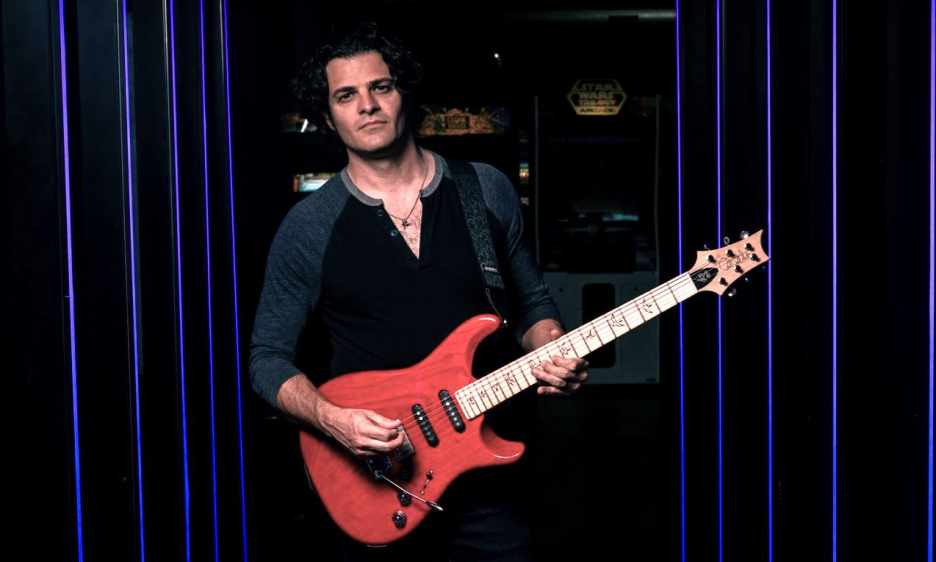
Courtesy Jordan Thibeaux
I don’t think I’ve plumbed the depths of everything I’m capable of
doing yet. I’m excited about that because it feels like I don’t have to
make the same record every time.
Mark Lettieri
”
data-original-title=”” title=””>Mark Lettieri first sat down with All About Jazz, much has changedand, in a sense, much has not. At the time of that 2020 interview), Lettieri had a budding solo career, but was still primarily known as being part of

Snarky Puppy
band / ensemble / orchestra
”
data-original-title=”” title=””>Snarky Puppy‘s (SP) formidable six-string triumvirate (along with fellow guitarists

”
data-original-title=”” title=””>Bob Lanzetti and

”
data-original-title=”” title=””>Chris McQueen).
Today, he’s still very active in SPand the Vulfpeck-adjacent
The Fearless Flyers
band / ensemble / orchestra
”
data-original-title=”” title=””>The Fearless Flyersbut Lettieri’s profile as a solo artist has seemingly outstripped his other notable activities. With ten releases under his own name at the time of this writing, a signature model PRS guitar, a stable and busy solo touring group, and an ever-growing list of collaborations (that include The

WDR Big Band
band / ensemble / orchestra
b.1946
”
data-original-title=”” title=””>WDR Big Band and the
Metropole Orkest
band / ensemble / orchestra
”
data-original-title=”” title=””>Metropole Orkest), Lettieri has steadily built a reputation as a “player of consequence” who has been moving beyond mere guitar circles.
Add to all this that he is older and wiser, and now very much a family manwhat may be more remarkable is what hasn’t changed. Lettieri still seems the same personable, down-to-earth guy who is still looking to push his musical boundaries furtherand is still excited and grateful that he gets to play music for a living.
Mark Lettieri sat down with All About Jazz via Zoom in November 2025.
All About Jazz: Let’s talk about your most recent project, Mark Lettieri Group Meets WDR Big Band at Studio 4 (Broken Silence Records/Leopard, 2025). How did that all come about?
Mark Lettieri: Sure. Well, I got an invitation from them via Joachim Becker, who is the head of the label over at Jazzline and Leopard. He’s worked with the WDR Big Band as executive producer for many different collaborations. I also did Deep: The Baritone Sessions Vol. 2 (GroundUP Music, 2021) on his label in Europe, so that’s how my name got thrown in there. They came to me and said that the WDR wanted to do a big band record of my music with

”
data-original-title=”” title=””>Michael Abene as the arranger, and so, of course, I said yes. [A project like] this was not something that had crossed my mind. I knew of Michael Abene’s work, of course, and I knew of the WDR and the different collaborations that they had done, but I never assumed or even really envisioned my music as something that could be worked out with a horn section that largebut it definitely, definitely worked.
So they came to me with the proposition, and we had maybe just a few brief calls with Michael Abene, and that was that. He’s just a really brilliant guyhow he hears things, but also he just likes to work. I think he writes everything out by hand, then just has somebody put it in Sibelius. He’s very old school. I felt sort of silly that I didn’t have much in the way of charts for my music because most of my guys just learn the stuff by ear. The only things I had were these guitar tablatures I had made that were brilliantly accurate. I think Michael was like, “What the hell are these?” (laughs) I said not to worry about the notations. The chords were there, so maybe he could pick out what was going on. I think that helped, but it probably overwhelmed him for a second there. (laughs)
Anyway, he came up with these arrangements, but then, unfortunately, wasn’t able to make the session. The WDR had a guy named Jörg Kellera really great drummer and a great conductorwho conducted the band for the sessions. We were there for two weeks, not working the whole time. We did a couple of days of rehearsals and then a couple of days of recording. We also played two live shows with them while we were in Cologne.
AAJ: What was recording with the WDR Big Band and their process like for you?
ML: You know, the WDR, they have a very, very corporate schedule. Over here in the States, we’re used to being in the studio all day, and going to get a couple of pizzas and come back, and then we’re gonna do this and thatyou know, it’s all very relaxed. They’re very structured, so it took us a minute to kind of get into the flow of how they work, but that’s just how they work.
AAJ: How did it feel to play your music in that context with the WDR?
ML: When it’s you doing your own music, you have a very particular connection to it and the way it needs to feel while you’re playing it and how it needs to be for you to feel good about it. I feel great about the record, but there were times when I was thinking, “Do you think maybe we could do another take or something?” (laughs) And because the guys in the group [drummer

”
data-original-title=”” title=””>Jason Thomas, bassist
Wes Stephenson
bass, electric
”
data-original-title=”” title=””>Wes Stephenson, keyboardist ”
data-original-title=”” title=””>Daniel Porter] and I have been playing these songs on tour for a couple of years, we had a specific way of playing them. Michael’s arrangements were true to the original tracks but just different enough that we were kind of having to learn everything for the first time.
So we did have to modify a few quite a bit, actually, and really stick to parts. [My band] is so used to changing things on the fly and just being loose with stuff. I remember jokingly saying that I feel like I’m a session guitarist on my own session. So I’m not gonna lie, it was challenging, man.
AAJ: Were the arrangements tweaked much as you went through them?
ML: A little bit, yeah. Just to make sure certain things felt right in the room with the cats, but not too much. I mean, I guess there were maybe a few things that Michael [Abene] did that I thought were maybe too far left or too far rightwhere I thought it’s just going to feel better if we stick to this kind of thing. But if you’ve heard any of the music before, you can definitely hear his influence and what he did to the form and things like that.
AAJ: Do you feel that many of the tunes are noticeable departures from your original recorded versions?
ML: Kind of, yeah. “Gigantactis,” which is one of the baritone [guitar] tracks, has a lot of extra stuff in it. “Goonsquad” came out really well. “Slide Rule” was cool. The guys in WDR took solos on that, and they were all amazing. “Knows,” which is a really old song of mine, has a lot of different stuff in it. Yeah, I think they kind of all do, actually, which was the point, you know? And it definitely feels about as live as you can get to me, I think.
AAJ: So the recording is a full live performance?
ML: Not totally. We rehearsed it that way, yeah, but we recorded the core band, and then the horn section came in afterwards to record. I think the way the room is, there might otherwise have been too much bleed. But aside from the horns, there wasn’t a lot of overdubbing or layering on top of the band. Basically, we’d get like a couple of takes of us playing it through and that was that. There are some YouTube videos that are all of us playing live, but the WDR likes to get in there and make sure everything’s super tight.
The whole process was interesting for me because I’m so used to being way more hands-on with stuff. I had to kind of let go of a lot of that and trust that their process was going to work. It’s a cool record, and it’s different. It’s very different. I think if anyone has already checked out my music a bit, this will be a really cool way to experience it.
AAJ: Were there any other challenges working with the WDR?
ML: One thing that threw us for a loop was that when we got there, we found out that the WDR tunes to A:442. [Interviewer’s Note: Standard tuning is A:440.]
AAJ: Really?
ML: I don’t know why. I think it has something to do with the horns, but that’s the way they’ve been doing it for years. In hindsight, had I known that, I might have actually had my guitar set up better for A:442 because I just went in there and tuned it up, you know.
AAJ: Did things feel noticeably different, being tuned up two cents?
ML: It was to me. It’s slightly… like a little… I don’t know, but I had to get used to the way the guitar felt because obviously the action changed a little bit. So I had to go in and tweak it a little there. So yeah, if you’re at home and you’re gonna play along to the record, you’ve got to tune your guitar up two cents.
AAJ: Does a mere two-cent difference create a noticeable difference in sound to you as well?
ML: I don’t know. Maybe I was just in my head about it, and it could have just totally been my paranoia, but it was weird.
AAJ: Sometimes players say that those kinds of thingsthe ones that throw you off just a littleare just enough to put you up on your game that much more.
ML: I think so, too. Yeah, and there’s definitely some cool moments in there that probably wouldn’t have happened had we recorded it a different way, because it was basically live.
AAJ: You mentioned before that there were times when you might have wished for another take. Does that make you uncomfortable sometimes, things being a little “warts and all” live?
ML: Yes, absolutely. (laughs)
AAJ: That brings to mind an interesting related issue concerning live recordings, if you’ll bear with me. I’m thinking of how nearly all of the SP members I’ve interviewed were completely taken aback at the success of We Like It Here (GroundUP, 2014) when, at the time, it was clearly a breakout record to most listeners. Then again, it was probably also one fraught with some of the most unique stressors for the musiciansthe biggest being not having a drummer until the very last minute. It obviously all turned out wellas evidenced by the still-burgeoning popularity of We Like It Herebut do you think it’s the case that most musicians can’t separate the experience of recording from the actual music on the record?
ML: Yes, but that’s the way it always is. Because when you’re in it yourself, you’re not one of the people in the chair with the headphones just having a good time, right? So, yeah, for me, recording the WDR record, a lot was going on internallystress and all these other thingsbut I bet if I had just walked in there watching everybody do it, I’d probably be like, “This is gonna be the greatest record of all time.” (laughs)
Hopefully, people will think it’s a really cool thing. It’s definitely something I’m proud of, and it’s definitely something I’m glad I got the opportunity to do.
AAJ: So, again, from an observer’s chair, thinking of your material with a big band seems not too unlike taking one of your songs into Snarky Puppy and saying, “Hey, you want to give this a go?” I realize the situation is a bit different, but in terms of thinking of your compositions in an expanded form, was it similar to that experience at all for you?
ML: It’s a little different because with Snarky, it’s a big band in that there’s a lot of people, but it’s not a big band, right? There aren’t thirteen horns in Snarky Puppy, like there are in the WDR. I think that was sort of the difference.
I don’t write too much for Snarky. I’ve only written a few songs for them, but you kind of have a plan in place for what everything’s gonna sound like, or at least what each little section is gonna do. With this music, none of it was new. I knew what it was supposed to sound like without anybody else playing on it. So it was like, “Now that I’ve handed it over to you [the WDR], what are you gonna do with it?”
And that’s one of those things. I don’t personally arrange for big bands. I never have. That’s why I just told Michael [Abene]. “Man, do whatever you want.” He definitely was like, “You guys just keep doing what you’re doing. Don’t worry about me. I’m not gonna change what you have to do… ” you know, that kind of thing. That was only half true, you know. (laughs) We definitely had to learn some stuff for the first time. And so that’s why I said it kinda felt like I was a session player on my own session.
AAJ: Did these WDR sessions in any way echo your experience in Snarky Puppy working with the Metropole Orkest for Sylva (Impulse, 2015)?
ML: Well, obviously, the WDR big band is a little bit smaller than Metropole, but a similar ideaa large ensemble. It was actually a bit different, though. The Metropole does keep a tight schedule, but with those Metropole sessions, the only weight there on me is just to play my guitar parts, right? That’s my only job. I’m not producing; I didn’t write anything, so it’s very much more like being a session player/band member.
Whereas, with the WDR sessions, I’m responsible for this chunk for the next several days, and I have to make that happen as best I can, you know? I’m listening to everything that’s going on, and I’m probably paying way more attention to what others are playing than to what I’m doing. So [with the WDR,] it’s probably more like what

”
data-original-title=”” title=””>Michael League feels like [in Snarky Puppy/ Metropole Orkest sessions].
AAJ: You’ve touched on how your experience with the WDR compared to recording Sylva with the Metropole. Could you also share some of your experiences recording the new Snarky Puppy / Metropole project, Somni (GroundUP, 2025), and how that compared to the recording of Sylva?
ML: Sure. I think probably the best way to describe it was that Sylva felt like an orchestral record that Snarky Puppy was built around. Somni feels more like traditional Snarky Puppy songs that the orchestra was incorporated into. I think Michael League might have done that on purpose so that we could play the tunes without the orchestra if we needed toand SP is apparently doing that on tour right now.
Sylva really felt like an orchestral suite. There were movements where a lot of times we weren’t playing anything in the guitar section in particular. We would tacet for several bars, until you had to come in with your thing, and then you lay out again, just like a traditional orchestral composition, whereas Somni, I was playing mostly the whole time.
So, yeah, I think Somni is maybe a little bit more on the groove-oriented side, and that may be where the band is moving right now. I mean, SP has always been a groove-based band, but it’s been a little more in the direction of the “building of a vamp” sort of energy. I got a lot of that from some of the songs on Somni versus Sylva, but they are definitely two sides of the same coin. I think if you liked Sylva, you’re gonna like Somni.
AAJ: Did Michael League write all of Somni?
ML: Yeah. He did. And then he arranged it with
Jules Buckley
composer / conductor
”
data-original-title=”” title=””>Jules Buckley, ”
data-original-title=”” title=””>Jochen Neuffer, and Sam Gale.
Jochen is an awesome dude. I did a gig of my own music with the Metropole last summer, with Jochen conducting and doing some of the arranging as well. That was super fun. I was really hoping we could one day turn that into an album. We’re trying to figure out a way. We filmed parts of the show. It was just a one-off performance, but I’m trying to figure out a way to get the video out as well.
AAJ: On the subject of your compositions, there was a tune, “Black Iris,” on your recent record. Can I Tell You Something? (GroundUP, 2024), where there seemed to be a noticeable shift in focus from your usual presentation. It was notable in that, rather than your guitar taking its usual place at the forefront instrumentally, the composition is really front and center, more so than any one instrument. Add to it that you give the only solo spot to violinist

”
data-original-title=”” title=””>Zach Brock, and it stands out somewhat as an interesting digression from your normal guitar-centric compositions. Any thoughts on that?
ML: I think there’s a lot I can write if I really want to do it. I don’t know. I’m not trying to toot my own horn here, but I don’t think I’ve plumbed the depths of everything I’m capable of doing yet. And I’m excited about that because then it feels like I don’t have to make the same record every time. But “Black Iris,” I mean, I don’t know if this sounds like what Mark Lettieri fans would be used to. It’s just a different side of me, so I’m gonna do that. And this next baritone record is gonna still be baritone funk, but it will be different than the other twojust because I feel like I need to try other things.
AAJ: When you’re working on material, do you think to yourself, “Is this something a Mark Lettieri fan would want to hear?” or do you just say, “This is what’s coming out. This is what’s going to be on my next record.?”
ML: It’s probably a little bit of both, I think. It’s probably 60 or 70% what I want to do, and then 30 or 40% what people are expecting me to do. Because, in terms of instrumental guitar music, which is essentially what I do, there’s such an emphasis on skill, technique, and that kind of thing, and that’s such a rabbit hole/rat race that you’ll never win. And especially for me, it’s like, I know what I’m capable of and I know what I can’t do. There are players that are light years beyond me technically, and I gave up trying to do that a long time ago so that I could write music that I thought was cool. And so in that regard, yeah, I just want to make stuff that I’m really proud of. And if it sounds like “Black Iris,” great. If it sounds like “Magnetar,” great. If it sounds like “Goonsquad,” great. The challenge is making sure that it all still sounds like me and that it has my fingerprint on it. And, you know, I think it does.
This is kind of why I rely on feedback from fans who tell me, “Yeah, man, I could tell it’s you,” and then I guess I’m doing what I’m supposed to be doing. It is hard to stand out in a sea of virtuosos, and I’m done with trying to “out-virtuoso” other players. I mean, c’mon, some of these guys…
AAJ: Well, it’s probably fair to say that you have more than a couple of things that make you stand out amongst the instrumental guitar crowd.
ML: Well, and it’s also fair to say that I don’t listen to a ton of instrumental guitar music anymore, but the records that I go back to are ones where the guitar playing is kind of like secondary to the overall atmosphere of the music. And so that’s what I always try to put forth. I know it’s heard from guitar players all the time, “Oh, yeah, we’re just into writing songs.” But are they really? Because that “song” is 90% guitar solo with a song just bookending it.
AAJ: But it is kind of funny that a lot of players you have obviously listened to
Steve Vai
guitar, electric
”
data-original-title=”” title=””>Steve Vai,

”
data-original-title=”” title=””>Joe Satriani,

”
data-original-title=”” title=””>Eric Johnson, and the likekind of legitimized the whole “It’s okay if it’s just an excuse for a guitar solo” attitude, no?
ML: But you know what? I don’t even know if I would include those guys in that statement because I think they’re as big as they are because they wrote cool music. You know, there’s another layer out there that I’m trying to break through. People are forgetting that there needs to be a song. I’m not trying to get on a sermon here or anything, but…
AAJ: Well, there are a lot of modern bands now that have taken that old model of improv-based jazz or instrumental music and honed it into something more like a vocal tune that you might hear on the radioexcept there are no vocals. Bands like

Kneebody
band / ensemble / orchestra
”
data-original-title=”” title=””>Kneebody, Snarky Puppy, and yourself all do this, to different extents. The forms have been made more listenable, while in many cases, still maintaining space for some very challenging and inventive musical statements.
ML: I think that the hard thing about doing instrumental music is finding the fine line between keeping it accessible and keeping it interesting. There are definitely extremes to both sides. Like where it’s so musically complex that by a minute into a song, you’ve heard 12 songs’ worth of material. Then the other end of the spectrum is like elevator music that is designed for you not to pay attention to. I think everyone wants to sit somewhere in the middle.
As a guitarist, I think the temptation is to go into “check me out” world, but the more of that you do, the less room there is for composition, really. You know, I can tell within seconds if someone is a “good player” or not, but then after that, I don’t even really care. But even if they’re not what one might consider “good,” if they’re providing a unique musical experience and a great composition, I’m going to choose that over a virtuoso who has a song that doesn’t sound like a song.
AAJ: You must be busy these days. Being an observer, one only sees what’s visible, but everything else that you must have to do behind the scenes, that’s got to be a lot, right?
ML: It’s a bit non-stop. I mean, this Fall has been interesting, but I had to kind of pump the brakes on some other stuff just because I wanted to try to keep writing this new baritone record. I meant to get it done over the summer and just didn’t. It’s just life. So I’ve given myself a release date of the end of September/beginning of October 2026. Now there’s a deadline. I gotta get to work.
AAJ: Let’s talk a little about your work with Fearless Flyers. You recently released Fearless Flyers V (Roundwound Media, 2025), correct?
ML: Yeah, that came out in May 2025.
AAJ: What’s the process with Fearless Flyers records? Are you all together in the same place when you record?
ML: Yes, it’s all live, but things have kind of shifted a little bit for this last record. This was the first one that we kind of did independentlymeaning outside of the Vulfpeck umbrella. We just released this one on our own.

”
data-original-title=”” title=””>Cory Wong produced it; I had a hand in writing a lot of the material.
I think it’s a cool record because as a band, we were getting down to the aesthetic of what the Flyers isthese kinds of “micro funk” tunesbut expanding a little bit harmonically and melodically and trying a few things that might be different. I’m not saying that we went out and made a Weather Report album or anything, but I think there’s a little bit more color, compositionally. It still feels like a Flyers record to me.
So, yeah, I brought in some stuff, Cory brought in some stuff,

”
data-original-title=”” title=””>Nate Smith brought in some stuff, and then arranged it as a band. We do a couple of takes, and what you see is what you get. We film it all too.
AAJ: Do you send each other ideas before getting together?
ML: We’ll come in with demos. For a couple of the songs, Cory sent me some stuff, and I wrote some melodies to it. Or maybe I would rearrange his chords and write some melodies. Other things I kind of brought in as is. We sort of arrange it together on the floor, but not a lot of rehearsing really. We did that last record in a few days. The music’s not super complicated, but it definitely needs to be approached with a specific energy and focus. There are only four of us, and that makes the arrangement all the more important, if only for the fact that there is a lot of space to do stuffand the natural tendency is to do stuffbut really it’s better to not always do stuff. But yeah, I’m hearing some cool feedback. I hope we get to do another one in this vein.
Also, when we were on tour in Italy this summer for four or five shows, we recorded this cool live record, [The Fearless Flyers Live in Italy (Self-released, 2025)], so you can get a nice taste of the new music live and also the classic stuff. It’s one night in Italy. It was great. The crowd was great. They were really rocking, a great show. If you told me that this band would be playing in front of thousands of people in Europe, I’d say you were crazy, but that’s what it is, man. They love it.
AAJ: There are also videos of you guesting on Cory Wong’s tour recently. What’s that like, stepping into that situation?
ML: We just did that one tour last fall, but that was super fun. I mean, that’s my homeboy, you know, and we get on great. His band is really kickass and fun, and it’s just a good hang. It’s a fun group of people to travel with, and of course, the shows have a ton of energy.
It wasn’t a hard thing to step into and kind of find stuff to play over that music. He’s really great at packaging his sound for a live show. I mean, the horn section is really kind of the star on that gig. And he’s got danceable, catchy tunes with this blasting horn section. It’s like a party band somewhere between a

Tower of Power
band / ensemble / orchestra
b.1968
”
data-original-title=”” title=””>Tower of Power-meets-”
data-original-title=”” title=””>Red Hot Chili Peppers kind of thing. And lead guitar, it’s there, but it’s not the main focus. The main focus is the groove and the big horns being fun, catchy, and danceable. That’s why it translates so well to big rooms.
But for me, stepping into it was easy because I’m very familiar with Cory’s sound from playing together in the Flyers. He’s also very confident in his approach, so it’s cool. I hope we get to do it again. He’s busy, though, and he’s got to make that happen for me, you know? (laughs)
AAJ: Is there anything that you are listening to these days?
ML: I’m always picking around different stuff. What did I listen to? The last thing I listened to was

”
data-original-title=”” title=””>Mark Guiliana‘s record called Mark (Edition, 2024), because we have the same name. (laughs) No, I thought that was really interesting music. I don’t know if you heard it, but it was very cool. He’s one of my favorite drummers for surejust an incredible musician. I should say that he’s much more than just the drummer on this record. It’s a bit of drums, but a lot of synths, and vibe and atmosphere. That’s a neat little piece of music to listen to.
Besides that, I’ve been kind of trying to find different inspiration for the new baritone record, so I’ve been listening to some

Bobby Caldwell
vocals
1951 – 2023
”
data-original-title=”” title=””>Bobby Caldwell, some

”
data-original-title=”” title=””>Chaka Khan, and stuff like that. I don’t think the baritone record’s gonna sound like any of that (laughs), but that’s what I’ve been listening to. We’ll see. [Those influences] all come out through your filters somehow.
AAJ: Any other projects coming out or things you’ve set your sights on in the future?
ML: Yeah, basically, I want to do a lot of things, but there’s also another crazy project that I have coming out next year. I co-wrote and co-produced an album with a sitar player from Mumbai, Purbayan Chatterjee. He’s like a sitar god over there. Purbayan sat in with Snarky Puppy when we played in India last. He and I got along really well, so he had hired me to just play guitar on the record, but then it turned into me helping him write a lot of the songs. It’s pretty cool. It’s kind of Indian classical fusion meets progressive rock with EDM beats and different things. It’s interesting. So that project might come around and play some shows next year.
But yeah, I also want to do a vocal project. I’ve actually been talking with [Snarky Puppy keyboardist and trumpeter] ”
data-original-title=”” title=””>Justin Stanton. He and I are producing a little single. It’s been taking forever, but I want to get that out. But he and I also had talked about co-writing a record together where we’re the writer-producer guys and then have a bunch of different vocalists, you know? It would probably be everything from pop to folk to speed metaljust try it all. (laughs) Then get a bunch of our favorite musicians to play on it. I think that’s next on the horizon, somehow. I haven’t quite figured out how I want to do that yet, but…
AAJ: Since you last sat down with AAJ six years ago, it’s safe to say that one noticeable change that has occurred is that now you are getting better known for being your own musical entity than being a member of Snarky Puppy or other bands. Is that palpable for you, and has it changed what you have to do in a big way?
ML: Honestly, it’s been a goal of mine to have an outlet for the music that I write, to have my own thing, and to have it be sustainable. Obviously, Snarky Puppy was a big platform for that. I still love being a part of that band and putting on that helmet when it’s time to get into the game with them, because I love the music. I love the guys, and I know I have a particular skill set that benefits the sound of the band. I still enjoy putting myself into that world.
At the same time, I’ve been writing my own songs since I was 13 or 14 years old, so to be able to build something where I have albums to my name and tours to my name and a Grammy nomination and signature guitar and all these other things… I mean, that was all part of the plan, I think. (laughs)
Not to say that I always wanted to be “successful,” per se. That’s not it. And I’m not in any way resting on my laurels or anything. I mean, it’s hard work keeping my thing going, with my name on it. It is a grind every time and still very “independent,” if you know what I mean. Heck, the last time I played at Ronnie Scott’s, I broke a string on stage and I only had one standard-tuned guitar with me. So, I had to have a guy from the audience come up and change the string on it, while I put on my baritone guitar and we played those songs until he finished. (laughs) So it’s not like I’m touring with all these guitars that come with me on the road in a vault behind my bus, you know, we get on the train with our backpacks and just go.
But I am grateful that people are paying attention and have allowed me to have this path now, you know? I’m thankful to be a working musician and be able to make a living doing stuff that I like with people that I care about. I consider myself pretty lucky. For the most part, it’s all stuff I like to do. I still like to travel, tour, and do clinics. I’m not interested in spending the entire year on the road, of course, but I like getting out and playing and meeting new people and sharing the music and playing stages of all sizes. I still do a lot of session workmostly remote stuff that comes through my email. I stay pretty busy with that because I like doing it.
I am always looking at other possible, cool avenues of revenue stream, I guess you could say, but at the same time, I want toI have tolike it. Otherwise, I’d probably just do something non-musical if it were just about making money. And there’s absolutely nothing wrong with that, if I wanted to go have a non-musical job. I think about that sometimes, but until then, I will keep doing what I’m doing and continue to build upon it as long as my bills are paid and my home life isn’t suffering, you know?
Tags
PREVIOUS / NEXT
Apr
4
Sat

Support All About Jazz

All About Jazz has been a pillar of jazz since 1995, championing it as an art form and, more importantly, supporting the musicians who make it. Our enduring commitment has made “AAJ” one of the most culturally important websites of its kind, read by hundreds of thousands of fans, musicians and industry figures every month.
Go Ad Free!
To maintain our platform while developing new means to foster jazz discovery and connectivity, we need your help. You can become a sustaining member for as little as $20 and in return, we’ll immediately hide those pesky ads plus provide access to future articles for a full year. This winning combination vastly improves your AAJ experience and allow us to vigorously build on the pioneering work we first started in 1995. So enjoy an ad-free AAJ experience and help us remain a positive beacon for jazz by making a donation today.